“one plant” search results (10000)
Taiwan Coffee Flavor Coffee Taiwan Coffee Culture
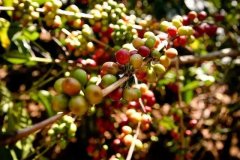
In the 18th century, in 1884 (Guang Xu's 10th year), the British introduced coffee for trial planting in the three Gorges of Taipei. during the Japanese occupation era, the Japanese saw that Taiwan's climate and soil were suitable for coffee, so they introduced "Arabica" from abroad and successfully planted it in the north. Mizuho invested a lot in planting and had a good yield. In the 19th century, in 1941, the output was rich, the quality and flavor was good, which made coffee in Taiwan's complete victory period. No.
2016-05-20 Taiwan coffee flavor boutique coffee culture 18th century 1884 Guang Xu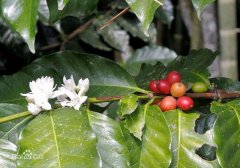
Washed coffee and ripe beans at Diamond Hill Manor in Costa Rica
Costa Rican coffee cultivation was introduced by Cuba in 1779 and exported for the first time in 1820. There are about 32000 coffee farmers, with an average planting area of less than one hectare (10000 hectares) per farmer. Costa Rica has a population of 41 billion (2006), with a coffee planting area of 82500 hectares and an annual production of 1.7 million bags (60kgs per bag). The annual domestic consumption is 380000 bags.
2016-05-08 Costa Rica Stone Mountain Manor Water washing Coffee cooked beans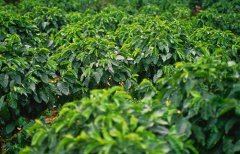
Costa Rican Diamond Hill Manor washed SHB Kaddura Fine Coffee American Coffee
Costa Rican coffee cultivation was introduced by Cuba in 1779 and exported for the first time in 1820. There are about 32000 coffee farmers, with an average planting area of less than one hectare (10000 hectares) per farmer. Costa Rica has a population of 41 billion (2006), with a coffee planting area of 82500 hectares and an annual production of 1.7 million bags (60kgs per bag). The annual domestic consumption is 380000 bags.
2016-07-07 Costa Rica Stone Mountain Manor Water washing SHB Dula Fine goods Coffee America
Introduction of Los Congo Manor Coffee Manor in Nicaragua with excellent planting environment
Los Congo Manor is one of the few estates that are self-sufficient, raising livestock, logging and making organic fertilizers from coffee berries, so that their planting and treatment processes do not use chemicals at all. It has unique conditions in Central America-- rich water resources and excellent water quality, growing coffee and excellent volcanic mud soil, and the soil area of cultivated land is large.
2016-07-14 Fine planting Environment Nicaragua Los Congo Manor Coffee introduction Luo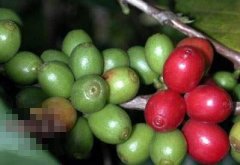
The growth process of Coffee Coffee basic knowledge
First, planting time: April 15-25 period. Second, planting location: plain, hillside, wasteland, front and back house, forest and fruit tree seedlings can be planted, but should not be planted in tall trees or other unventilated places. Third, herbal coffee does not like flood and fertilizer, conditional planting can use farm manure, during the growth period, it is best to irrigate 1-2 water during the growth period, absolutely do not allow the use of all kinds of chemical fertilizers and
2015-04-24 Coffee growth process basics common sense planting time April 15 -2
Yunnan will start 20,000 tons of instant coffee production line next year
The history of coffee cultivation in Yunnan dates back to 1892. A French missionary brought coffee seeds into Yunnan from abroad and planted them successfully in a valley in Binchuan County, Yunnan Province.
2014-06-04 Coffee News Yunnan Coffee Instant Coffee
Introduction of Coffee Price planting Environment and Variety producing areas in Lemon Manor in Nicaragua
Nicaragua is now one of the poorest countries in Central America. Due to its poor economic foundation, the coffee industry is still relatively backward, while coffee farmers are in extreme poverty. Fortunately, Nicaraguan coffee has received some foreign aid funds to improve the quality of its coffee. Coffee from Madagelba, Sinodega and Segovia in Nicaragua
2016-10-14 Nicaragua lemon tree manor coffee price planting environment variety producing area
Coffee is one of the most popular drinks in the world.
Coffee is one of the world's most popular drinks and one of the world's most traded commodities. I'm currently writing a book about coffee, but I've been hesitant: I don't know how many coffee consumers really want to know all this stuff about coffee. Many of us like to savor the taste and feel of a cup of piping hot Scotch coffee, let alone taste it.
2015-07-28 coffee world popular drink one
Introduction of planting conditions and Environment in Nicaragua Heavenly Coffee Manor producing area
Los Congo Manor is one of the few estates that are self-sufficient, raising livestock, logging and making organic fertilizers from coffee berries, so that their planting and treatment processes do not use chemicals at all. It has unique conditions in Central America-- rich water resources and excellent water quality, growing coffee and excellent volcanic mud soil, and the soil area of cultivated land is large.
2016-07-12 Nicaragua planting conditions environment introduction divine gift manor coffee producing area Luo
History of introduction and expansion of Coffee in early China (5)
1. From the first peak period of the development of China's coffee industry (1952-1961) to the late 1940s, according to recorded figures, there are 2173.33 hectares of rubber plantations in Hainan Island, with a total of 867600 rubber trees, with an annual output of 199,000 tons of dry rubber, and more than 300,000 coffee plants. the annual output of coffee beans is 1 ton. According to a survey in the early 1950s, there was a large amount of coffee left in Fushan area of Chengmai County, with a total of 70,000.
2015-04-28 Early China coffee introduction expansion
What are the kinds of coffee beans?
Coffee species Editing Plant Classification Coffee beans Coffee trees belong to Rubiaceae evergreen trees, Rubiaceae plants have been dominated by plants with special effects since ancient times, quinine trees, which are regarded as specific drugs for malaria, and Dugen, which is used to treat amitoeba dysentery. Coffee is defined as the most unique alkaloid drinking flora. The fruit of coffee is made up of outer skin, pulp, endocarp and silver skin.
2016-06-05 Coffee beans categories what coffee species editors plants classification coffee beans trees
What kind of coffee beans do they belong to in plants
Coffee tree belongs to the evergreen tree of Rubiaceae. Since ancient times, most of the plants of Rubiaceae are plants with special effects, such as quinine tree, which is regarded as a specific drug for malaria, and Dugan, which is used to treat amoeba dysentery. Coffee is defined as the most unique alkaloid drinking flora.
2014-08-22 Coffee knowledge coffee beans plants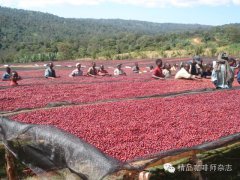
Costa Rica Diamond Hill Manor in Costa Rica washed SHB Kaddura boutique coffee beans
Costa Rican coffee cultivation was introduced by Cuba in 1779 and exported for the first time in 1820. There are about 32000 coffee farmers, with an average planting area of less than one hectare (10000 hectares) per farmer. Costa Rica has a population of 41 billion (2006), with a coffee planting area of 82500 hectares and an annual production of 1.7 million bags (60kgs per bag). The annual domestic consumption is 380000 bags.
2016-06-30 Costa Rica Costa Rica Stone Hill Manor Water washing SHB
Introduction to the planting environment of coffee flavor varieties in Joy Manor, Nicaragua
Nicaragua is now one of the poorest countries in Central America. Due to its poor economic foundation, the coffee industry is still relatively backward, while coffee farmers are in extreme poverty. Fortunately, Nicaraguan coffee has received some foreign aid funds to improve the quality of its coffee. Coffee from Madagelba, Sinodega and Segovia in Nicaragua
2016-09-19 Nicaragua Joy Manor Coffee Flavor Variety Taste planting Environment introduction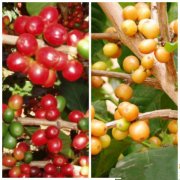
Important conditions of Coffee cultivation basic conditions of Coffee Tree planting
There is a noun called coffee belt. There are more than 60 coffee producing countries in the world, most of which are located in the tropics and subtropics between the Tropic of Cancer (latitude 2326). This coffee growing area is called coffee belt (Coffee Belt) or coffee area (Coffee Zone). The annual average temperature of the coffee belt is above 20 ℃, because the coffee tree is a tropical plant, if the temperature is below 20 ℃.
2015-03-28 Coffee cultivation important condition planting basic there is a noun called coffee.
Coffee in the cup depends on climate, pests and plant science.
Photo Source: Baidu Pictures A recent report on the impact of climate change on crop cultivation mentioned that the coffee crisis is already brewing, especially the highly praised Arabica coffee beans. A study published in PLOS One in April mainly simulated coffee cultivation in 21 different climatic conditions up to 2050, covering 60 tropical countries on both sides of the equator.
2015-07-08 Coffee in the cup depending on climate pests plants aspects science pictures sources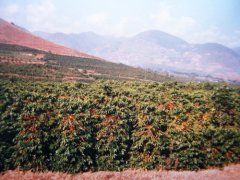
Yunnan Lujiang Coffee Farm
Lujiang Farm is located in the west of Yunnan Province, 24952515 north latitude and 98839888 east longitude. The altitude is 6801000 meters. Under the jurisdiction of Longyang District, Baoshan City, adjacent to Lujiang Town and Mangkuan Dai and Yi Township, 542km east to Kunming, capital of Yunnan Province, 120km west to Myanmar Banwa, highway through farm to Kunming, national secondary highway directly to Myitkyina of Myanmar, transportation is very convenient, air
2014-07-09 Coffee farm Yunnan coffee farm Yunnan coffee beans
The production of coffee, the planting technology of coffee manor.
Arabica coffee and Robbite coffee are harvested once every 3 to 4 years, and their lifespan varies due to different production conditions and different degrees of care (usually 20 to 30 years, after which they have to be replanted). Both varieties need plenty of sunlight and moisture. Arabian coffee trees like the seasonal climate of 15-24 ℃; Robbins like warm.
2016-06-06 Coffee yield planting technology manor Arabian coffee Robbins all 4
Coffee planting History of Coffee introduction and expansion in China in the early stage (5)
1. From the first peak period of the development of China's coffee industry (1952-1961) to the late 1940s, according to recorded figures, there are 2173.33 hectares of rubber plantations in Hainan Island, with a total of 867600 rubber trees, with an annual output of 199,000 tons of dry rubber, and more than 300,000 coffee plants. the annual output of coffee beans is 1 ton. According to a survey in the early 1950s, there was a large amount of coffee left in Fushan area of Chengmai County, with a total of 70,000.
2014-10-14 Coffee knowledge coffee growing history Chinese coffee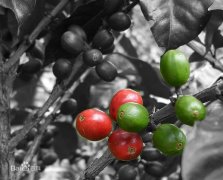
Taiwan Fine Coffee Coffee grown in Taiwan delicious Taiwan Coffee
In the 18th century in Taiwan, China, in 1884 (the 10th year of Guang Xu), the British introduced coffee to the three Gorges in Taipei. during the Japanese occupation, the Japanese saw that Taiwan's climate and soil were suitable for coffee, so they introduced "Arabica" from abroad and successfully planted it in the north. Mizuho invested a lot in planting and had a good yield. In the 19th century, 1941, rich output, good quality and flavor led to the complete victory of coffee in Taiwan.
2016-05-18 Taiwan boutique coffee planting delicious single product China 18th century 1